How to Choose the Right Hypertherm Consumables Easily


Choosing the right Hypertherm consumables is very important for achieving clean plasma cuts, better machine performance, and longer consumable life. The wrong consumables can reduce cutting quality, increase dross, and slow down your cutting speed.
Here are some simple steps to help you choose the right Hypertherm consumables easily.
1. Check Your Plasma Cutter Model
The first step is to make sure the consumables match your plasma cutter model. Different machines require different consumable parts.
For example, systems like Powermax, HPR, and MAXPRO use different torch designs and consumables. Always check the machine manual or part number before buying.
Using incorrect consumables can lead to poor torch performance and reduced cut quality.
2. Consider the Material You Are Cutting
The type of metal you cut plays a big role in choosing the right consumables.
Common materials include:
Mild steel
Stainless steel
Aluminum
Different materials may require different gas types and consumable designs to maintain a stable plasma arc and achieve clean cuts.
3. Choose Based on Metal Thickness
Metal thickness determines which nozzle and amperage rating you should use.
For example:
Thin sheets require fine-cut nozzles for precision.
Thick metal plates require larger nozzles and higher amperage.
The nozzle size directly affects cutting precision and speed. Smaller nozzle openings provide more precise cuts, while larger openings allow cutting thicker materials.
4. Select the Correct Consumable Parts
A typical Hypertherm consumable set includes several parts, and each part has a specific function.
Main consumables include:
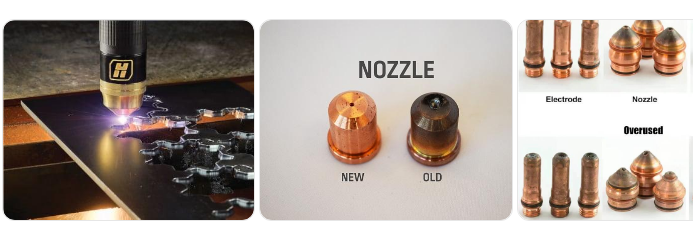
Electrode – creates the plasma arc that melts metal.
Nozzle – focuses the plasma arc for cutting.
Swirl ring – controls gas flow and stabilizes the arc.
Shield – protects the nozzle from heat and metal splatter.
Retaining cap – holds all consumables in proper alignment.
Choosing high-quality parts ensures better cutting performance.
5. Match Amperage with Consumables
Every nozzle has an amperage rating, and the machine should run at the same amperage.
For example:
45A nozzle → set machine to 45 amps
65A nozzle → set machine to 65 amps
Using incorrect amperage can cause unstable arcs and poor cutting performance.
6. Use Genuine Hypertherm Consumables
Many cheap alternatives are available in the market, but genuine Hypertherm consumables usually provide:
Better cut quality
Longer life
Stable arc performance
Lower cost per cut over time
Original consumables are designed specifically for Hypertherm plasma systems.
7. Inspect Consumables Regularly
Consumables wear out during cutting. If you notice these problems, replacement may be needed:
Rough or uneven cuts
Excessive slag or dross
Difficulty starting the arc
Wider kerf width
Worn consumables can change the edge quality and cutting performance, so regular inspection is important.
Quick Tip: Always follow the cut charts and recommendations provided by your plasma cutter manufacturer. This helps ensure the correct consumables, settings, and gas flow for the best cutting results.
FAQs
How do I know which Hypertherm consumables fit my machine?
To choose the correct Hypertherm consumables, you should check your plasma cutter model and torch type. Each machine uses specific part numbers for electrodes, nozzles, and other components. Always refer to the machine manual or supplier specifications to ensure compatibility.
Can I use non-genuine consumables with Hypertherm plasma cutters?
Non-genuine consumables may work, but they often reduce cut quality and wear out faster. Genuine Hypertherm consumables are designed specifically for the machine, providing better arc stability, longer life, and more consistent cutting results.
How often should Hypertherm consumables be replaced?
Consumables should be replaced when you notice signs such as rough cuts, excessive slag, unstable arc starts, or reduced cutting performance. Regular inspection after several cutting cycles helps maintain optimal cutting quality and prevent machine damage.

Comments